783 Million People Face Hunger Globally According to FAO Report — Learn How You Can Help


As many as 783 million people are facing hunger globally, according to the 2023 edition of the FAO’s State of Food Security and Nutrition in the World report recently published. That equates to just under 10% of the world’s population. But what exactly does this mean? In this blog, we’ll share some of the report’s key findings, what Rise Against Hunger is doing to address this critical issue and how you can get involved to provide urgent support now.
Global Food Insecurity and Hunger: The Latest Findings
Hunger refers to the physical feeling someone experiences when they don’t have food, and food insecurity is when a person does not have regular access to the nutritious food needed to live a healthy life. In addition to 783 million people facing hunger, the report also states that around 2.4 billion people are food insecure, nearly 30% of the global population. And while rates of hunger have decreased in Asia and Latin America, hunger increased in Western Asia, the Caribbean and Africa in 2022.
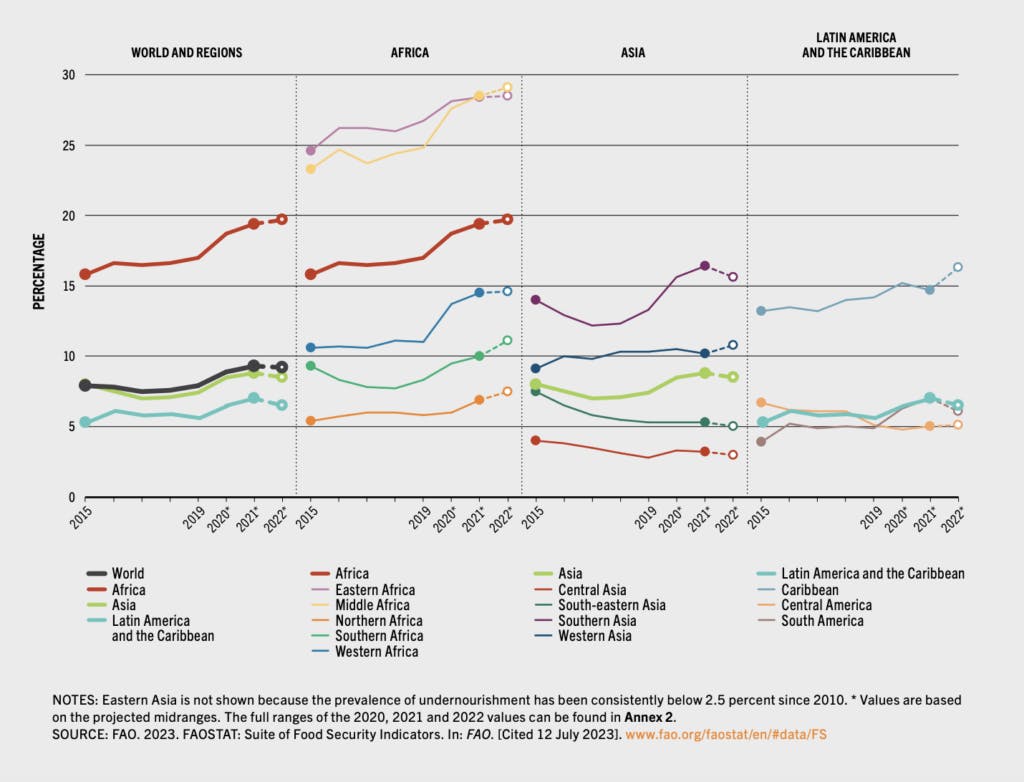
There are three major contributors to hunger and food insecurity: conflict, climate change and economic declines. The report explains that “the intensification and interaction of conflict, climate extremes and economic slowdowns and downturns, combined with highly unaffordable nutritious foods and growing inequalities, are pushing us off track to meet the SDG 2 targets.” For example, COVID-19’s economic impact massively affected hunger. 7.9% of the population faced hunger in 2019 prior to the pandemic; in 2022, the percentage was 9.2. It is predicted that at least 122 million more people are facing hunger than before the pandemic.
Several findings illustrate progress, though. The FAO reported that approximately 3.8 million fewer people faced hunger in 2022 than in 2021. This is a marginal decrease, but rates of hunger at least stalled after increasing from 2019 through 2021. Additionally, while hunger affects women at higher rates than men, progress has been seen toward closing the gender gap, decreasing it from 3.8% in 2021 to 2.4% in 2022. These findings give us hope at Rise Against Hunger — but global hunger remains a serious issue, as reinforced by the report. With 600 million people projected to still face hunger in 2030, it is more important than ever to act.
Work To Be Done: How Rise Against Hunger Continues to Address Food Insecurity
Rise Against Hunger is committed to addressing food insecurity through nourishing lives, empowering communities and responding to emergencies.
People living in rural areas and young children are disproportionately affected by food insecurity, which is why Rise Against Hunger works predominantly in remote, last-mile communities. We are focused on supporting people who face challenges in accessing adequate food. A large percentage of our meals are also distributed through school feeding programs to address children’s nutritional needs, like in Madagascar where 10-year-old Ematokisoa receives daily meals at school. Ematokisoa previously did not have enough nutritious food to make it through the school day, but he has been able to continue his studies since receiving meals and is preparing to begin secondary school. By providing food to nourish lives, Rise Against Hunger is working to alleviate food insecurity in remote areas in countries around the world.

The report states our global agrifood systems are susceptible to disruptions caused by hunger’s three major contributors. Rise Against Hunger’s Responding to Emergencies pathway provides assistance to people impacted by disruptions like natural disasters and political conflicts, ensuring those affected have the food they need. And through Rise Against Hunger’s Empowering Communities pathway, we work alongside local communities to address challenges to their agrifood systems. For example, in Mali, we are helping farmers implement climate-smart agriculture techniques through the Elevating Women and Youth Farmers project with partner AMEDD. Mali’s variable rainfall leads to severe droughts and floods, both of which cause agriculture disruptions. During a site visit in January this year, we worked with community and government stakeholders to establish a keyhole garden, which is able to withstand various weather and soil conditions, enabling farmers in Mali to grow food year-round and supporting the community’s agrifood system!
What You Can Do to Help
Hunger is a critical issue, but we can work together to alleviate it. Rise Against Hunger plans to exponentially increase our impact in the coming years — and we need your help.
Here are ways you can get involved:
- Donate to provide urgent support to communities around the world.
- Host a meal packaging event with your business, church, civic organization, school or other group to assemble the nutritious meals that are shipped to nourish lives across the globe.
- Share this blog with your friends and family! When more people know about global hunger and food insecurity, it encourages action and helps grow the movement to end world hunger.